Middle East War and the Largest Oil Supply Disruption in History. What It Means for the Global Economy
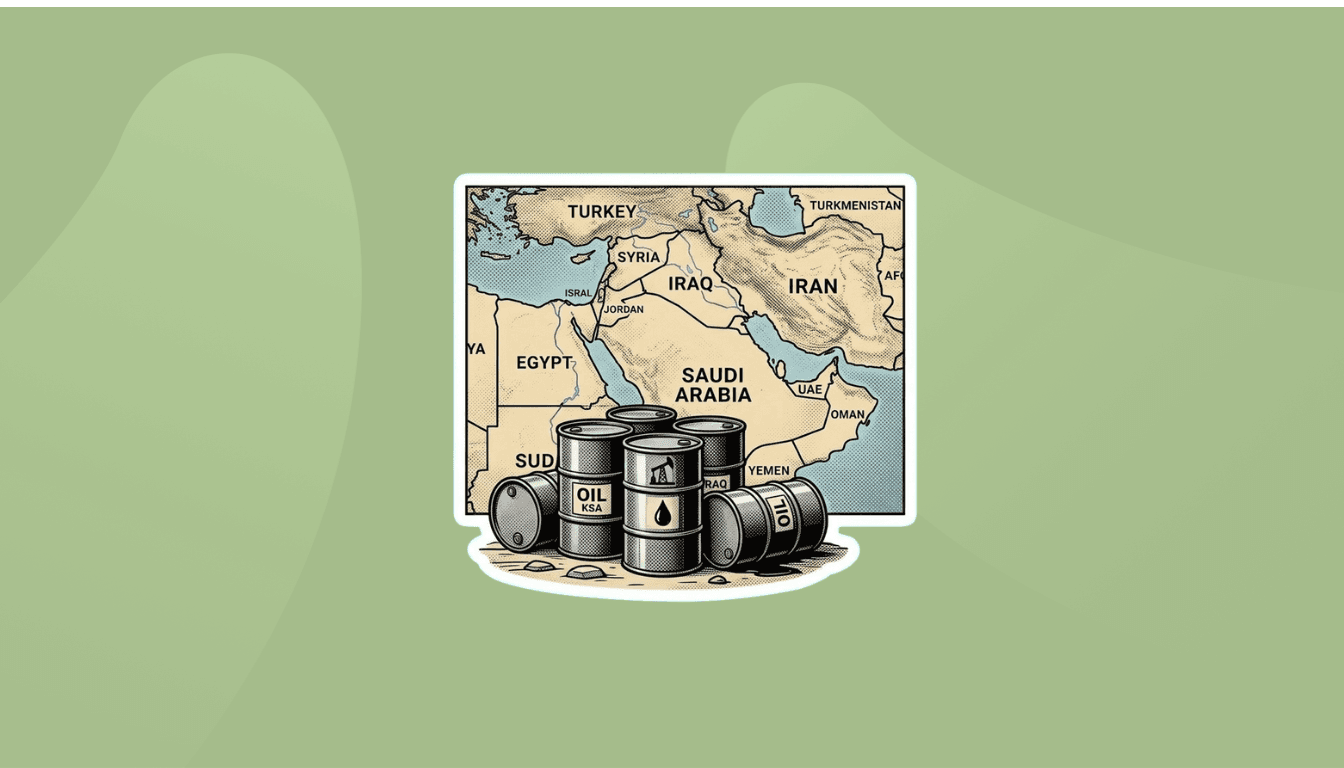
The International Energy Agency has officially cut its oil supply growth forecast following the most severe crude disruption the world has seen - and the timing, right after an emergency stock release, tells you everything about how serious the situation actually is. This isn't a blip. The Middle East conflict is strangling oil flows at a scale that energy analysts haven't had to model in decades.
How the IEA Oil Supply Disruption Is Reshaping Global Economic Forecasts
When the IEA slashes its oil supply growth forecast, the ripple effects hit every economy that runs on imported energy - which is nearly all of them. Economists are already revising GDP projections downward across Europe, Asia, and parts of Latin America, because crude oil price shocks don't stay contained to energy markets. They migrate into transport costs, food production, manufacturing, and eventually consumer prices. The IEA's decision to authorize an emergency release from strategic petroleum reserves was a clear signal that normal market mechanisms weren't absorbing the shock fast enough. Energy economists with experience in prior Gulf disruptions - 1973, 1990, 2003 - note that the current situation has a distinct characteristic: the disruption is happening while global inventories were already tighter than average. That combination makes price stabilization significantly harder. Estimates for how long elevated prices persist vary widely, but the range most analysts cite is 6 to 18 months before any meaningful supply rebalancing occurs, assuming the conflict doesn't escalate further. That's a long window for damage to accumulate.
Can Smaller and Developing Economies Survive a Prolonged Middle East Oil Shock?
Smaller economies face a structurally different problem than large ones. Countries like Pakistan, Sri Lanka, Egypt, and several sub-Saharan African nations spend a disproportionate share of their foreign currency reserves on crude oil imports, and when prices spike, they face an immediate choice between energy security and debt stability. Egypt's situation is particularly instructive - the country is already under IMF support, and a sustained oil price increase above $100 per barrel would compress its fiscal space dramatically. For net oil importers with limited reserve buffers, currency depreciation tends to follow energy price spikes almost mechanically, which then amplifies domestic inflation. The countries with the least capacity to hedge, borrow, or pivot energy sources are exactly the ones most exposed. Small island developing states and landlocked low-income countries don't have the luxury of spot-market flexibility. This is where the global oil supply disruption becomes a humanitarian issue, not just an economic one.
The Middle East Conflict Has Created the Largest Oil Supply Disruption on Record. Here Is What That Fact Does and Does Not Mean
The IEA's designation of this as the largest oil supply disruption in history refers specifically to the volume of crude oil flows affected by the Middle East conflict, as assessed at the time of the agency's revised forecast. This finding does not mean global oil supply has collapsed entirely, nor does it guarantee a sustained price spike of any specific magnitude, as strategic reserve releases and demand-side adjustments remain active tools. The disruption affects primarily crude oil flow volumes and supply growth projections - it does not automatically translate into equivalent economic contraction across all importing nations. The IEA's emergency stock release decision is a direct, documented response to this disruption, not a precautionary measure. Economies with diversified energy mixes, strong reserve positions, or existing long-term supply contracts are materially less exposed than those reliant on spot-market Middle East crude imports. The scope of impact is real and significant, but it is not uniform across the global economy.
How Long Will the Oil Supply Crisis Last and What Are Economists Actually Saying
The honest answer is that duration estimates for this oil supply crisis depend almost entirely on the trajectory of the conflict itself - and that's not something energy economists can model with confidence. What they can quantify is the structural damage that accumulates over time. Every month of elevated crude oil prices above the $90-$100 threshold adds measurable pressure to central bank inflation targets in importing countries, complicating rate decisions that were already difficult. Some analysts draw comparisons to the 1973 Arab oil embargo, which lasted roughly 5 months but caused economic dislocations that stretched years beyond the supply shock itself. The post-shock recovery timeline is almost always longer than the disruption itself - that's the pattern across historical cases. Infrastructure investment decisions, shipping route adjustments, and alternative supplier negotiations all take time that markets don't have the patience for. The 6 to 18 month window cited by most mainstream economists assumes no further escalation, a condition that remains far from certain given the current state of the region.
Why Companies in This Sector Must Respond to Events Like This - and How Content Marketing Makes That Possible
For businesses operating in the energy, commodities, and financial sectors, moments like this are not just news - they are an opportunity to demonstrate expertise and build genuine trust with their audience. When a disruption of this scale unfolds, the companies that communicate clearly about what it means, how it affects their industry, and what their clients or partners should understand are the ones that strengthen their market position over time. That is how effective content marketing works in practice: not as promotion, but as a consistent, informed response to real events that matter to your community. Translating complex developments - IEA forecasts, reserve releases, price threshold implications - into accessible, credible content is exactly the kind of work that JackSEO was built to support. Companies that stay visible and articulate during periods of market uncertainty don't just inform their audience. They become the source their audience returns to.