Singapore as a Global Gold Trading Hub. What It Means for the World of Finance and Business
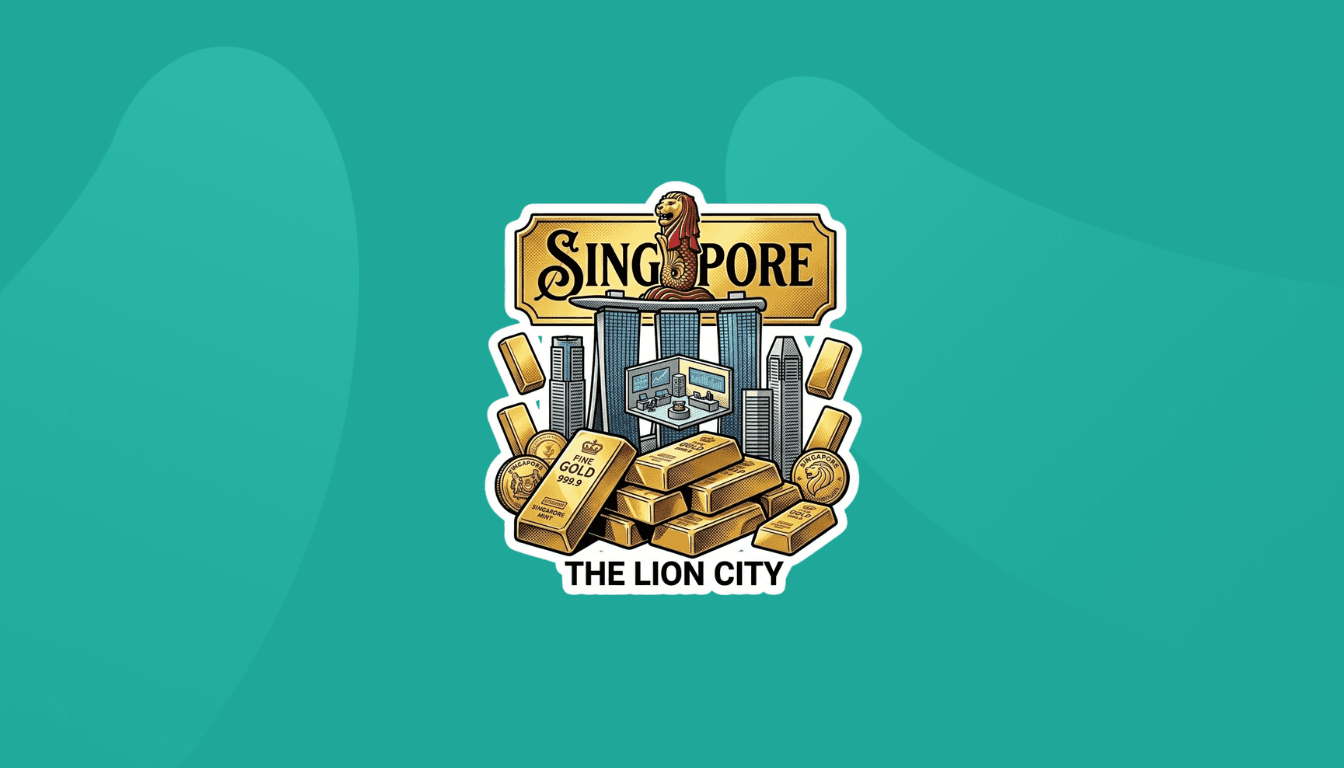
Singapore is making a calculated move to position itself as a premier destination for gold trading and bullion storage, including facilities aimed directly at central banks. This puts the city-state in direct competition with Hong Kong, and the implications stretch well beyond the precious metals market.
Why Singapore Is Targeting the Gold Market Right Now
The timing isn't accidental. With geopolitical tensions reshaping where institutions want their assets held, Singapore has been quietly building credibility as a neutral, stable, and legally predictable jurisdiction. Central banks don't move gold lightly - these decisions involve years of due diligence, diplomatic considerations, and infrastructure requirements. Singapore's pitch is essentially this: we offer everything Hong Kong does, minus the political uncertainty that has grown significantly since 2019. The city-state already handles a significant share of Asia's commodity trading, and gold is a logical extension of that existing infrastructure. The Monetary Authority of Singapore has been signaling openness to precious metals market development for several years. What's new is the explicit targeting of sovereign-level clients - central banks storing national reserves. That's a different league than retail or institutional gold trading, and it signals serious ambition.
What This Development Does and Does Not Change for Global Gold Markets
Singapore's push to become a major gold trading and bullion storage hub represents a direct competitive challenge to Hong Kong's role in Asian precious metals markets, driven by Singapore's positioning as a politically stable and legally reliable jurisdiction for sovereign and institutional gold custody. This development does not eliminate Hong Kong as a gold trading center, nor does it fundamentally alter global gold pricing mechanisms, which remain anchored to London and New York markets. The initiative affects the geographic distribution of physical gold storage and the routing of bullion flows within Asia, particularly for central banks reassessing custody risk. It does not change gold's underlying role as a reserve asset, nor does it introduce new trading instruments or regulatory frameworks for private investors. The scope is institutional and sovereign - retail gold market participants in Southeast Asia are not the primary target of this policy shift.
What Does This Mean for Startups and Emerging Fintech Businesses?
Here's where it gets genuinely interesting for anyone building in the fintech, commodity trading, or alternative assets space. When a major financial hub doubles down on physical asset infrastructure, it creates adjacent opportunities that didn't exist before. Think custody technology, gold-backed digital asset platforms, compliance tooling for cross-border bullion transactions, and logistics optimization for high-value physical goods. Singapore already has one of the most startup-friendly regulatory sandboxes in the world through MAS, and layering a serious gold market ambition on top of that creates a rare combination - regulated legitimacy meeting genuine market development. Startups working on tokenization of real-world assets should be paying close attention, because gold is the most historically trusted asset class on the planet, and Singapore just opened a door to build around it. The window between "government announces intention" and "infrastructure matures" is exactly when early-stage companies can establish positioning that becomes very hard to dislodge later. We've seen this pattern before in Singapore's payments and wealth management sectors - the government signals direction, smart founders move fast, and three years later the ecosystem looks inevitable in hindsight.
Singapore Versus Hong Kong. A Competition Built on Trust, Not Just Logistics
Framing this purely as a logistics competition misses the point. Central banks choosing where to store gold are making a geopolitical trust decision as much as an operational one. Singapore's neutrality - it maintains working relationships with both Washington and Beijing - is a genuine strategic asset that no amount of Hong Kong infrastructure investment can easily replicate right now. The numbers matter too: Singapore ranks consistently in the top 3 globally for ease of doing business, rule of law indices, and financial regulatory quality. For a central bank moving even a fraction of its reserves, those rankings aren't abstract - they're risk management inputs. Hong Kong remains a massive, capable market, and this isn't a story about one winning and one losing outright. But the direction of sovereign capital flows in Asia is shifting, and Singapore is positioning to capture more of that movement. For startups, the message is simple: proximity to sovereign financial activity creates a different class of business opportunity than proximity to retail capital. That's a distinction worth building a company around.