Wall Street Records Sharp Losses on Trade Uncertainty and AI Fears
Wall Street Records Sharp Losses on Trade Uncertainty and AI Fears
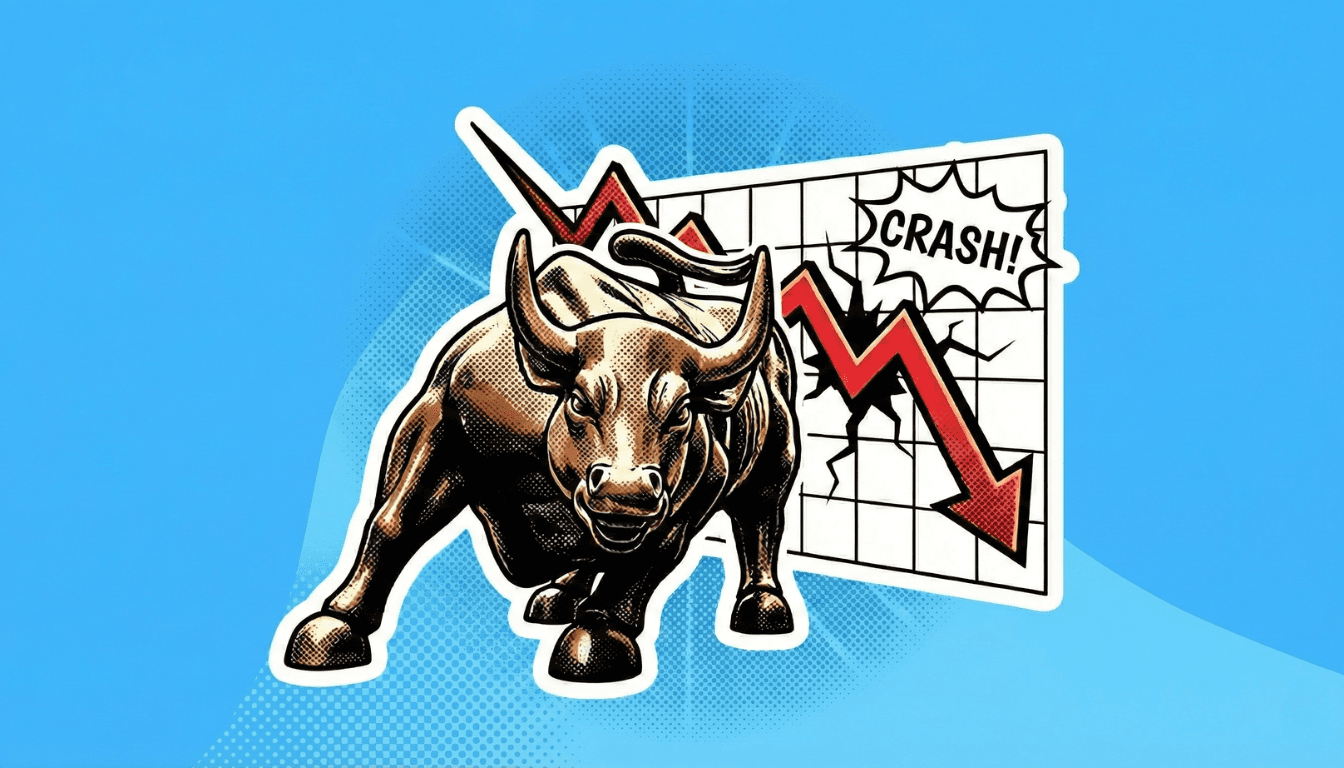
Major U.S. stock indexes posted their steepest declines in weeks as investors grappled with mounting tariff uncertainty and growing concerns about artificial intelligence market valuations. The S&P 500 dropped 1.0%, the Nasdaq Composite fell 1.1%, and the Dow Jones Industrial Average plummeted 821 points, marking a significant shift in market sentiment that's already sending ripples across global trading floors.
What Triggered the Sudden Sell-Off on Wall Street?
The sell-off wasn't caused by a single headline but rather a confluence of persistent worries that finally broke through market resilience. Tariff policy remains maddeningly unclear - companies don't know what they'll pay next quarter, and that kind of uncertainty kills investment decisions. The AI anxiety runs deeper than most headlines suggest. It's not just about whether valuations got ahead of themselves. Traders are questioning the actual revenue timeline for AI investments, and when Big Tech can't answer that convincingly, money moves to the sidelines. The Dow's 821-point drop, its worst performance in five weeks, tells you institutional money is rotating out, not just retail investors getting spooked. That's the kind of move that catches attention in trading rooms from Frankfurt to Hong Kong.
How Market Breadth Reveals the Real Story Behind the Numbers
The percentage drops don't fully capture what happened under the surface. Market breadth was ugly - declining stocks outnumbered advancers by roughly 4 to 1 on the NYSE. That's not sector-specific weakness, that's broad-based liquidation. The Nasdaq's 1.1% decline, its worst since February 12, hit hardest in mega-cap tech where AI exposure is concentrated. You're seeing a direct reassessment of the companies that drove most of 2024's gains. Small caps didn't fare much better despite theoretically having less AI exposure, which suggests the tariff angle is hitting domestic-focused companies just as hard. When both growth and value get hammered simultaneously, it's usually because the macro picture is clouding up fast.
The News Confirms Two Immediate Impacts Without Changing Long-Term Fundamentals
This sell-off reflects genuine near-term risk repricing in U.S. equities driven by unresolved trade policy and AI investment scrutiny, but does not indicate a fundamental break in the underlying economy or corporate earnings trajectory. What it does change: short-term volatility expectations have risen, options pricing will adjust upward, and cross-asset correlations are tightening as uncertainty spreads. What it doesn't change: actual tariff implementation remains unknown, AI technology development continues regardless of stock prices, and corporate balance sheets remain historically strong. The scope is limited to sentiment and positioning adjustments rather than changes in economic data or policy certainty. Markets are reacting to the absence of clarity, not the presence of catastrophe.
Can European Markets Absorb the Shock or Will Contagion Spread?
European markets will feel this, no question. The correlation between Wall Street and European indices runs too deep for anything else. DAX futures were already down in after-hours trading, and the FTSE will likely open lower given the heavy weight of multinationals exposed to U.S. consumer demand. But here's what might be different - European indices never rode the AI wave as hard as U.S. tech did. The downside from valuation compression is therefore somewhat limited. Tariff uncertainty actually hits Europe harder in some ways because export-dependent economies like Germany face threats from both U.S. trade policy and potential Chinese retaliation. The euro's recent weakness gives some cushion to exporters, but that's cold comfort when your largest trading partner's policy direction is anyone's guess. French and Italian markets, more domestically focused and already trading at deeper value, might show more resilience. The real test comes when London opens - if financial stocks hold up despite Wall Street's stumble, that suggests Europe's viewing this as an American problem rather than a global reset.