Why early-stage brands should care about GEO first
Early-stage brands live in a strange moment. On one hand, they are small, fast and hungry. On the other, they compete for attention in a world dominated by companies with bigger budgets, bigger teams and louder voices. For years, SEO was the great equalizer. If you knew what you were doing, you could outrank brands ten times your size. Today, that playing field is changing again - and this time, the advantage shifts toward brands that understand Generative Engine Optimization (GEO) early.
GEO is not a replacement for SEO. It is its natural evolution. And for young brands, especially those operating locally or scaling globally from day one, it can be the difference between being invisible and being recommended.
How people search is changing faster than most brands realize
Search behavior is no longer limited to typing keywords into Google and clicking blue links. More and more users now ask questions directly to AI tools like ChatGPT, Perplexity or Gemini. They do not want ten options. They want one clear answer.
According to the Civic Science report “ChatGPT Is Still Leading the AI Wars, but Google Gemini Is Gaining Ground”, a growing share of people already use generative AI tools for everyday tasks like work, shopping, learning and planning. These are not experimental behaviors anymore - they are habits forming in real time.
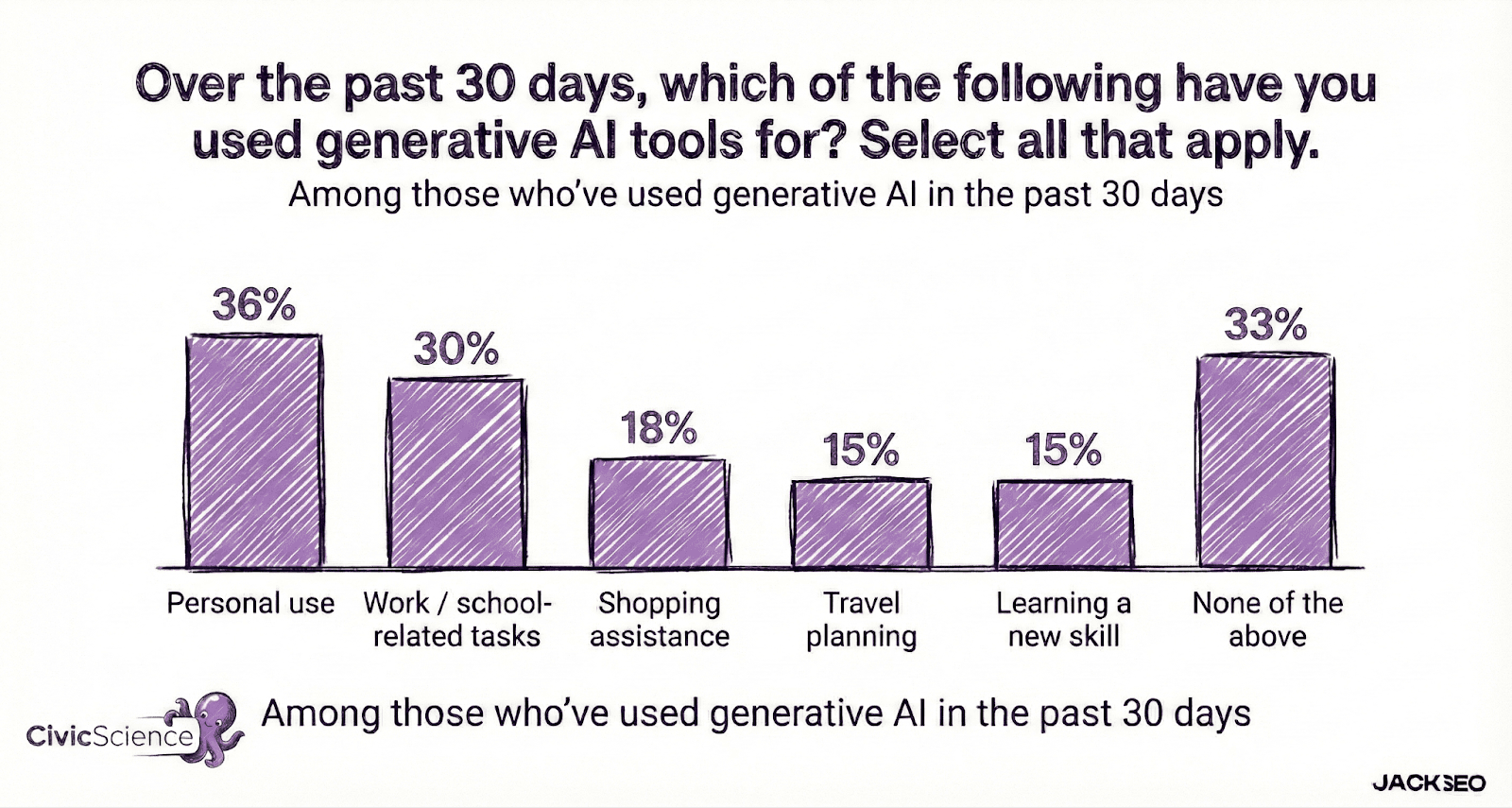
This matters because AI tools do not “rank” websites the way search engines do. They synthesize information from multiple sources and present a single, confident response. If your brand is not part of that synthesis, you simply do not exist in the answer.
For early-stage brands, this shift is both a threat and an opportunity.
SEO still matters, but it is no longer the full game
Let’s be clear - SEO is not dead. It still drives traffic, credibility and demand capture. But relying on SEO alone today is a bit like opening a great restaurant and hoping people will magically walk in because the sign looks nice.
Gartner puts numbers behind this shift. In its report “Gartner Predicts Search Engine Volume Will Drop 25% by 2026, Due to AI Chatbots and Other Virtual Agents”, the firm forecasts a significant decline in traditional search usage as people increasingly rely on AI-driven answers.
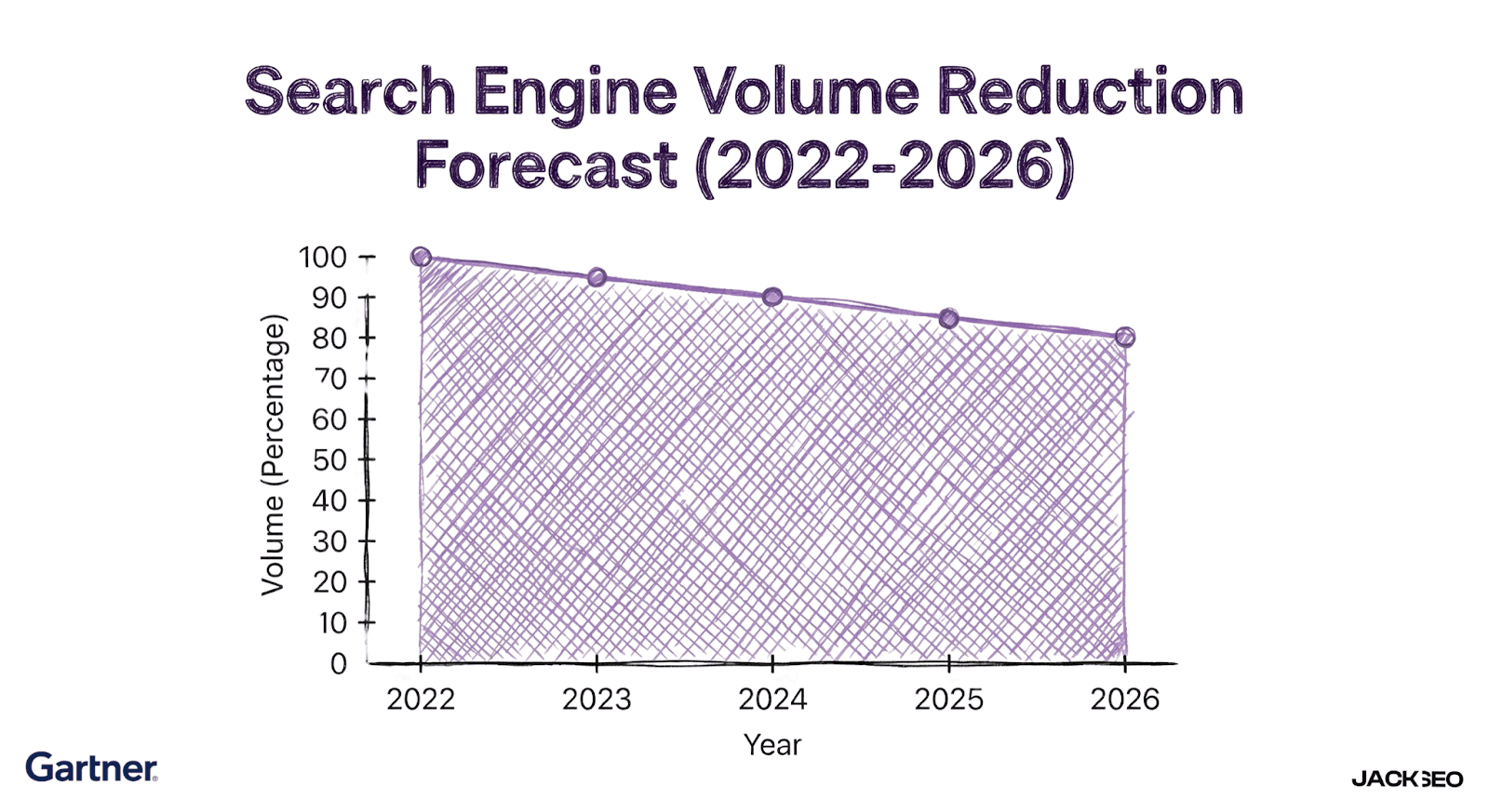
That means fewer clicks, fewer opportunities to “win” purely on rankings and more zero-click journeys where the decision happens before a user ever visits a website.
For early-stage brands, this is critical. When search volume shrinks, competition inside classic SEO grows. The brands that win are not necessarily the biggest, but the ones that are most understandable to AI systems.
Why GEO levels the playing field for smaller brands
Here is the good news. Large companies are slow. Their content processes are heavy, approvals take weeks and messaging often sounds like it was written by committee. Early-stage brands do not have that problem.
GEO rewards clarity, expertise and relevance, not size.
A local pizzeria that clearly explains what makes its dough different, appears in local reviews, gets mentioned in community discussions and is consistently described the same way across platforms has a real chance of being recommended when someone asks an AI tool “Where should I eat tonight?”. The same applies to a small accounting office, a niche SaaS startup or a B2B tool solving one very specific problem extremely well.
AI does not care how big your company is. It cares whether it understands what you do, who you help and why you matter.
That is where early-stage brands can move faster than incumbents.
Authority beats volume when AI decides who gets mentioned
One of the biggest myths in content marketing is that more content automatically means more visibility. In the world of LLMs, this simply is not true.
AI systems learn from authoritative sources, expert opinions, consistent narratives and external validation. They do not need hundreds of blog posts saying the same thing in slightly different ways. They need signals that your brand actually knows something worth repeating.
Think of it like this: SEO is about earning a seat at the table. GEO is about being quoted once the meeting starts.
You can rank for “best project management software” and still never be mentioned by an AI assistant if your content does not say anything new, useful or trustworthy. Authority is built by taking positions, explaining concepts clearly and showing up in places that already matter to your audience.
Early-stage brands can move faster than AI learns
Large language models are trained on massive datasets, but their understanding of brands evolves based on what they see repeatedly and consistently. This creates a window of opportunity.
Early-stage brands that invest early in GEO can shape how AI systems understand them before the narrative becomes fixed. It is much easier to teach an AI who you are today than to correct a vague or wrong perception later.
This is where combining SEO and GEO matters most. SEO ensures your foundation is solid. GEO ensures your story travels beyond your website and into AI-generated answers.
Where JackSEO fits into the picture
This is exactly where tools like JackSEO come in. Building visibility today is not about choosing between SEO or GEO - it is about connecting them.
JackSEO helps early-stage brands create content that works on both fronts. Content that is structured for search engines, but written for understanding. Content that supports rankings, while also feeding the signals AI systems rely on when summarizing and recommending brands.
Instead of producing more noise, the focus shifts to producing clearer narratives, stronger authority signals and content that actually gets remembered - by humans and machines alike.
Why starting with GEO gives you a long-term advantage
Early-stage brands do not win by outspending competitors. They win by outlearning them.
As search behavior continues to shift and AI becomes a primary interface between users and information, visibility will belong to brands that understood the change early. GEO is not a future tactic. It is already shaping how decisions are made.
SEO gets you indexed. GEO gets you included. And for young brands trying to grow in a crowded market, being included is often what makes all the difference.